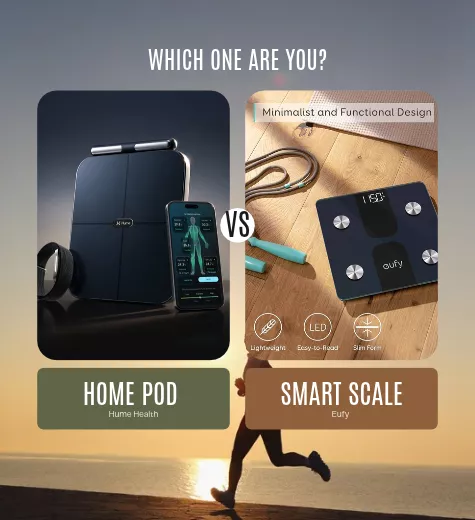
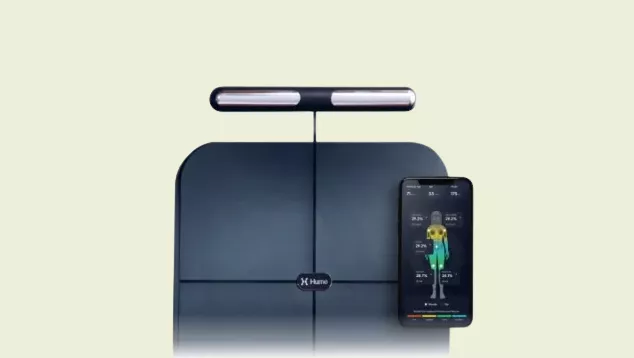
A Hume Pod vs Eufy smart scale decision depends on how much detail you want. Both connect measurements to an app, but their sensor designs differ. Hume Pod 2.0 uses hand and foot contact for segmental estimates; Eufy’s P2 Pro uses foot sensors. That difference shapes the progress each device helps you review.
A useful Hume Pod vs Eufy smart scale comparison starts with measurement method, metrics, app features, and body-composition detail. Check each against your goals before choosing a routine for tracking.
What The Eufy Body Composition Scale Measures
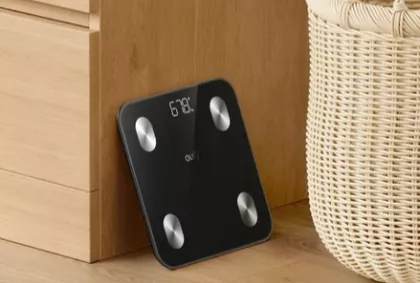
The Eufy P2 Pro uses foot sensors for 16 measurements, including body fat, muscle, bone mass, water, and heart rate, displayed in its companion app.
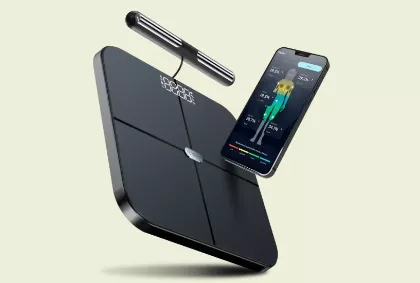
Hume Pod 2.0 combines platform and hand sensors to estimate composition across arms, legs, and torso, giving users a region-specific view of changes over time.
Both apps organise measurements over time, but Hume includes segmental results, while EufyLife focuses on broad body metrics and accessible trend history.
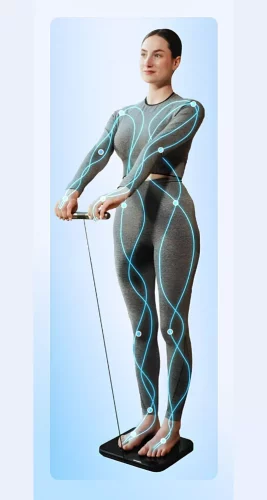
A Hume Pod vs Eufy smart scale comparison depends partly on sensor placement. HumeHealth’s Pod 2.0 uses eight hand and foot sensors to estimate five body segments separately. This helps users see whether changes appear in the arms, legs, or torso, rather than relying on whole-body totals. Eufy’s foot-based approach offers a simpler routine, but less detail for progress reviews.
Track Your Five Body Zones
Separate estimates for both arms, both legs, and torso add context beyond whole-body figures.
Track Fat And Muscle Gain
Compare fat and lean mass trends to understand why weight may stay steady during training.
A connected bathroom scale comparison should consider convenience as well as detail. The Hume Pod vs Eufy smart scale choice depends on useful measurement depth.
A Hume Pod vs Eufy smart scale decision is easier when priorities are clear. Consider whether regional estimates, simple weigh-ins, or shared household tracking matter most in your everyday routine.
For Simple Daily Use
Eufy suits users who prefer straightforward foot-based measurements.
The Hume Pod vs Eufy smart scale choice comes down to the information you want from a home weigh-in. Eufy’s P2 Pro offers a foot-based routine, broad estimated body metrics, and app records for tracking. Hume Pod 2.0 adds hand sensors and segmental estimates for the arms, legs, and torso, which may suit people following strength training or body-composition changes more closely. Neither device provides a medical assessment. Hydration, meals, exercise, and timing can influence bioelectrical impedance results, so consistent conditions matter. Choose the process you will use comfortably, then review longer-term patterns rather than single readings when assessing progress.