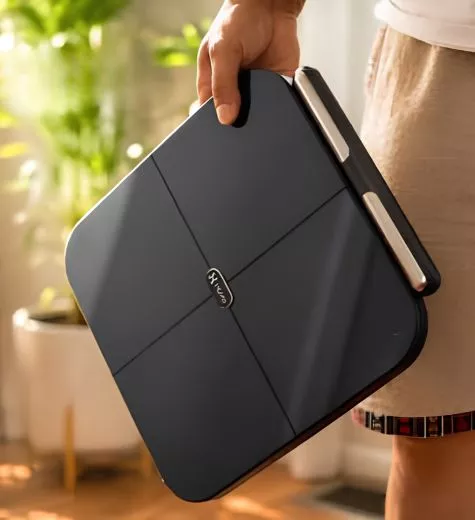
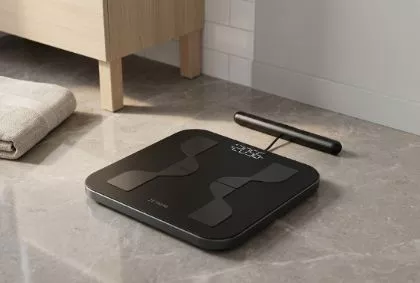
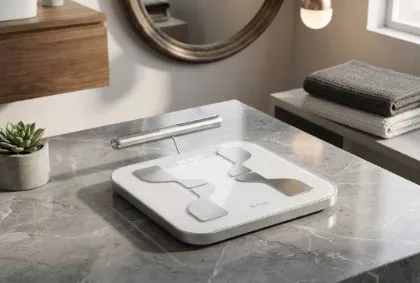
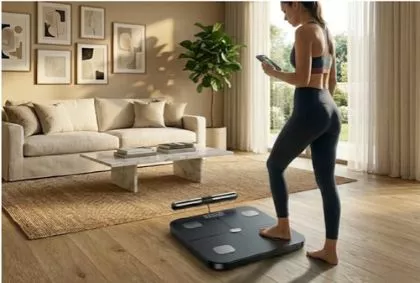
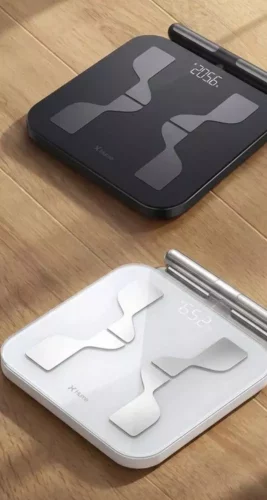
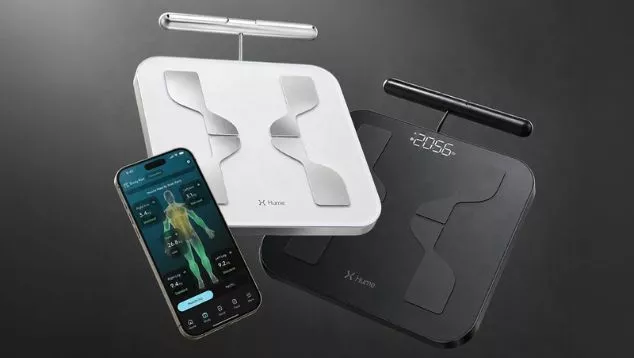
Most bathroom scales answer one question: how heavy are you? Hume Health built Pod 2.0 to answer the better one: what is that weight made of? Step on barefoot, hold the sensors, and the scale analyzes your arms, legs, and trunk separately, reporting fat, muscle, hydration, visceral fat, and more, so your next decision rests on actual evidence rather than a single, misleading number flashing at you every single morning.
Weight is only the headline. Hume Health’s Pod 2.0 reports body composition, separating fat, muscle, and water, so progress becomes visible every week, even when the scale refuses to move.
Fat And Visceral
Pod 2.0 reports body fat, subcutaneous fat, and visceral fat, the deep organ fat linked with cardiometabolic risk, helping you see whether weight changes reflect the fat you actually want to lose or something else.
Skeletal muscle mass and segmental readings for arms, legs, and trunk show exactly where muscle is building or fading, while left-versus-right comparisons highlight muscle imbalances that may affect training decisions, posture, and everyday physical movement.
Hydration and body water readings reveal whether weight drops are fluid that returns, while metabolic age compares your body’s condition with your calendar age, offering motivation and context rather than a medical verdict or diagnosis.
Pod 2.0 isn’t just a new color. Hume Health carefully rebuilt the scale inside and out with solid metal sensors, shielded electronics, and a smarter algorithm, plus a contact check before every reading. The goal is simple: cleaner signals from more kinds of bodies and bathrooms, so the numbers you track reflect you, not noise, uneven footing, or electrical interference.
Contact Check First
It confirms solid foot contact before measuring, so every reading starts from a clean signal.
Digital Twin Tracking
Each scan adds to a living model of you, showing trends instead of isolated readings.
Hume reports 99% body-fat accuracy compared with DEXA and 97% lean-mass accuracy against clinical-grade scanning, but those are brand claims. Bioelectrical impedance estimates composition and reacts to hydration, so consistent weigh-ins always matter more than any single dramatic morning reading.
Weigh in barefoot at similar times, mornings, so hydration and meals disturb your comparisons less.
Hold the handles steady, stand upright, and wait until the app confirms your scan finished.
Use the same scale for every comparison.
Judge weekly averages, never single daily readings.
Ask your doctor about pacemakers before scanning.
Treat results as wellness guidance, never diagnosis.
Daily use should feel quick and effortless. Hume Health’s Pod 2.0 supports weights up to 441 pounds, connects through Bluetooth, syncs with Apple Health and Google Fit, runs up to a year per charge, and recognizes multiple household members individually.
Who Should Buy It
Pod 2.0 suits people who want real evidence of change beyond scale weight.
Hume Pod 2.0 is a genuinely strong choice if you want to understand what your weight is made of, not just what it weighs. It separates fat, muscle, and water, follows visceral fat, compares left and right sides, and turns weekly scans into trends through a free-to-start app. Hume Health refined the hardware with solid metal sensors, a contact check, and shielded electronics, aiming for cleaner, more consistent readings. Still, treat every number as an estimate, scan under similar conditions, and talk with your clinician about unusual changes or implanted devices. If you’ll weigh in regularly and act on what you see, Pod 2.0 offers real, lasting value; if not, a simpler scale may be enough, and that’s perfectly fine.